
A permanent campus where young survivors can find safety, build trusted relationships, continue their education, and prepare for independent living.
Explore the Vision
The vision brings residential homes, gardens, shared spaces, and opportunities for learning and work into one setting.
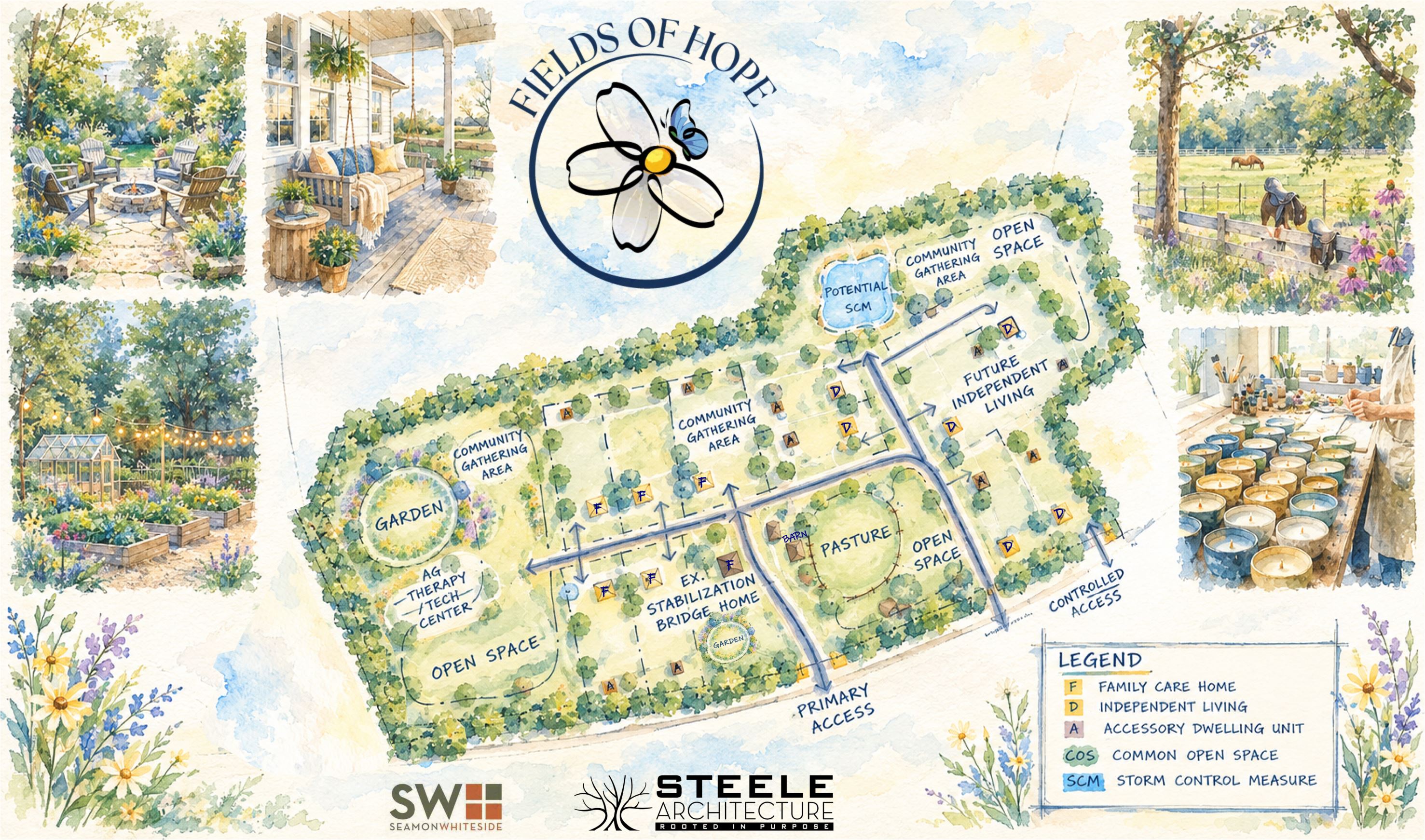
Campus concept plan · SeamonWhiteside and Steele Architecture. Proposed spaces show the longer term vision and are not all currently operating.
A home and consistent care
Residential homes and a stabilization bridge home are part of the vision. Homes of Hope combines housing with daily advocacy, case management, access to therapy and health care, and support tailored to each survivor.
Learning and meaningful work
Education and life skills remain central. Through Journey of Hope, survivors develop practical work skills and employment readiness alongside goals such as finishing school, budgeting, and managing a household.
Gardens, open space, and connection
Residential homes and a stabilization bridge home are part of the vision. Homes of Hope combines housing with daily advocacy, case management, access to therapy and health care, and support tailored to each survivor.
Preparation for the next chapter
Future independent living is part of the campus plan. Life of Hope continues support beyond residential care, helping survivors remain connected to resources as they take their next steps.
A campus creates room. Trained staff, therapy, education, and daily necessities make that room a safe home. We need partners who will invest in both the space and the care delivered there.
Capital gifts, monthly support, donated goods, and professional services each have a role. We would welcome a conversation about where your support can make a difference.
Make a giftEstablish and prepare the campus
Property, facility preparation, furnishings, and improvements needed for residential services.
Sustain the people and programs
Staffing, advocacy, therapy, health care coordination, food, transportation, and education.
Build opportunities for independence
Practical work experience, financial skills, continued care, and preparation for stable housing.
Keep prevention part of the mission
Y4H peer to peer education and Real Men Protect’s work to address demand continue alongside survivor care.
877-647-1230
10612 Providence Road, Suite D #484
Charlotte, NC 28277
Fields of Hope Charitable Tax ID: 74-3253195


To report a trafficking tip, please call the National Human Trafficking Hotline at 1-888-373-7888 or Text "Help" or "Info" to BeFree (233733)


